New Government Guidance on Digital ID for AML Checks
Danny Dean
July 10, 2026
•
5
min read
Summary sentence: The UK government has officially recognised digital ID as a legitimate route to AML compliance. Here's what that means for your firm, and what to look for in a provider.
New Government Guidance on Digital ID for AML Checks
The UK government has published new official guidance on using digital identity verification for money laundering checks, and the Solicitors Regulation Authority (SRA) has confirmed it applies directly to compliance under the Money Laundering, Terrorist Financing and Transfer of Funds (Information on the Payer) Regulations 2017 (MLR 2017).
For regulated firms in the UK, this is a significant moment as the government has now officially recognised digital ID as a legitimate, trusted route to meeting client due diligence (CDD) obligations. The question is no longer whether digital verification is acceptable, it's whether your firm is doing it properly.
The regulatory green light
The SRA has confirmed that the government no longer looks at digital ID as a grey area. It's now officially recognised as a legitimate route to meeting your MLR 2017 obligations.
If your firm is still relying on manual verification, the regulatory groundwork is now in place, and there's a strong case for switching: faster onboarding, less admin, and a better audit trail.
Digital ID doesn't replace your judgement, it supports it
One thing is clear: using a digital verification provider doesn't remove a firm's own responsibility for client due diligence. Firms still need to:
Assess client risk and apply a corresponding level of due diligence, rather than treating every digital ID check as equivalent
Keep proper records in line with Regulation 40 of the MLR 2017
Digital ID verification is a powerful input into your CDD process, not a substitute for it. Firms remain ultimately accountable, even when the verification itself is handled digitally.
What good digital ID actually looks like
Given that the government has backed digital ID as a credible route to CDD, the focus now shifts to provider quality. Not all digital verification is equal, and firms are still responsible for the checks they rely on. So what should you actually be looking for?
Document coverage. A provider should be able to verify identity documents from a wide range of countries and document types, not just UK passports and driving licences. Verify by Tiller checks against roughly 1,900 ID document types across 191 countries, making it well-suited for firms with international clients.
Address verification. Confirming who someone is only goes so far if you can't also confirm where they live. Verify provides real-time address verification across 69 countries, matching directly against government databases, credit agencies, utility companies, and landline telecoms data. That means higher accuracy and GDPR-compliant handling throughout.
Biometric verification. A document check on its own isn't enough. Strong digital ID involves confirming the document belongs to the person presenting it. Verify uses a 3-phase biometric face match combined with passive liveness detection, meaning a client completes their check with a single selfie, no head turns or blinking prompts required. In the background, the technology detects deepfakes, masks, and screen replays in real time, certified to ISO/IEC 30107-3 Level 2 standards. It's a significantly stronger check than a manual document review, with far less friction for the client.
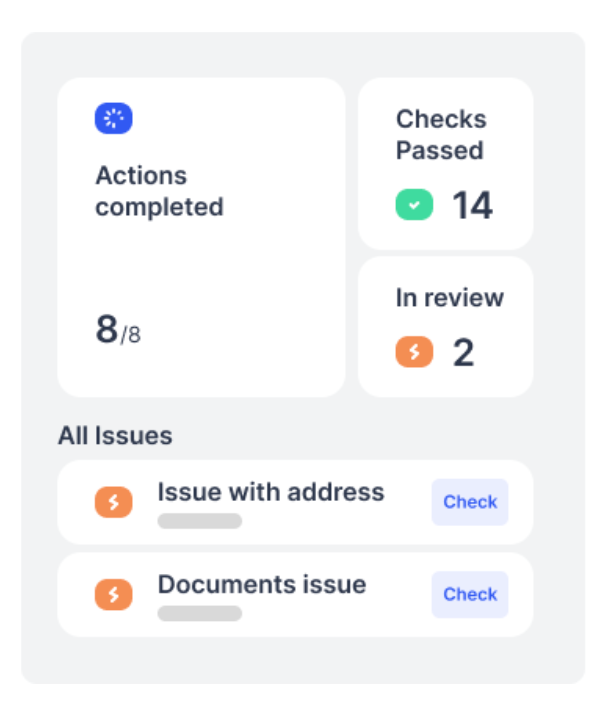
A proper audit trail. Firms need to be able to demonstrate what checks were carried out, when, and with what result. Verify by Tiller's portal lets your team review the results of every check, flag exceptions for manual review, and download a comprehensive report for each client. Your records stay audit-ready, and risk-based decision-making stays firmly with your team. This gives you the documented trail Regulation 40 requires, while keeping risk-based decision-making firmly with your team.
Screening beyond identity. Confirming who someone is doesn't tell you whether they pose a risk. Good digital verification includes PEP and sanctions screening, and adverse media checks as part of the same process, not bolted on as an afterthought.
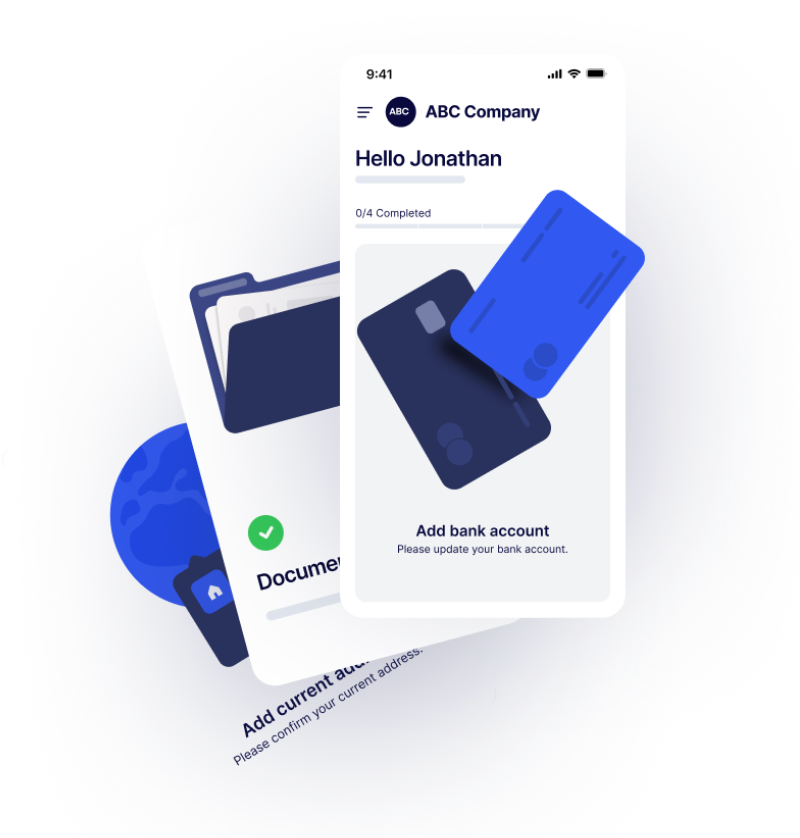
Ease of use for clients. The practical case for digital ID only holds if clients can actually complete the process without dropping off. Verify's desktop, tablet, and mobile self-serve app means clients can carry out their own checks at a time and place that suits them, reducing friction at the onboarding stage.
What this means in practice
For firms already running digital onboarding journeys, this is further confirmation that done properly, digital ID is a fully legitimate route to CDD compliance.
For firms still weighing up the switch from manual processes, the direction of travel is clear. The regulatory framework is in place, the technology is mature, and the compliance benefits speak for themselves.
In short
The UK Government has made the case for digital ID. The compliance question is now less about whether to use it, and more about making sure the provider and process you rely on are genuinely fit for purpose.
Verify by Tiller is built for exactly that, ICAEW-accredited, independently reviewed by BDO, and designed to sit cleanly within a risk-based AML process rather than replace your team's judgement.
If you're reviewing your firm's approach to digital ID in light of this guidance, our team is happy to walk through how Verify fits into your existing workflow.
FAQs:
Can digital ID be used for AML checks in the UK? The UK government has published official guidance confirming digital ID as a legitimate route to meeting AML obligations under MLR 2017, backed by the SRA.
Does using a digital ID provider remove my firm’s CDD responsibility? No. Firms remain fully accountable: assessing client risk, understanding the purpose of the relationship, keeping Regulation 40 records, and considering Regulation 19(4)(c) when adopting new technology.
Has the SRA confirmed the guidance applies to law firms? Yes. The SRA highlighted it in SRA Update 148, confirming it as official government guidance for MLR 2017 compliance and encouraging firms to consider whether digital ID would benefit them and their clients.
Join our newsletter to stay up to date on features and releases.
Finance
4
min read
Verify by Tiller Wins Innovation in Compliance Award at The Jersey Compliance Awards 2026: Jonathan Ripper Recognised for KYC and AML Platform Leadership
Jonathan Ripper of Verify by Tiller wins Innovation in Compliance at Jersey Compliance Awards 2026, recognised for KYC, KYB and AML platform leadership.
Jersey Finance features Verify by Tiller in its Fintech Spotlight Series
Verify by Tiller has been featured in Jersey Finance's Fintech Spotlight Series, detailing a client remediation programme completed in two months by a single compliance officer, using bulk upload and automated monitoring to meet JFSC standards.
In Guernsey, The Era of Wet-Ink Verification is Ending
The GFSC's May 2026 AML/CFT Handbook update formalises digital verification in Guernsey as the CDD standard. Here's what changed and what your firm needs to review.




.png)